

 172
172Content.Hub
SEO, Linkbuilding, Content marketing for business
Click `Register`, you confirm that you have read, fully agree and accept the terms Terms of use of the site
Already sign up Login
 199
199
Anchors are elements of web pages that allow the user to go in one click to another page or resource on the Internet. They consist of a text part and the address (URL) of the web page to which they lead. Once they are activated, the user is redirected to the specified url.
If you look at the html code, they look like text between tags. It is the standard use case, but some forums specify them differently.
Here is a table explaining the main types of such elements:
|
Anchor link type |
Link anchor example |
|
Text |
"Contact Us", "Read More" |
|
Descriptive |
"Linkbuilding" |
|
Branded |
"Contenthub" |
|
URL anchor |
"https://contenthub.pro/" |
Each given example of an anchor link has its own characteristics and can be used in different contexts on web pages to ensure reader friendliness and search engine optimization.
An anchor link can be used in various contexts such as textual content on websites, blogs, social media, email newsletters, and even PDF documents. By using them, users can navigate to another page of your or an external web resource with a single click.
Anchor in SEO fulfills several important functions:
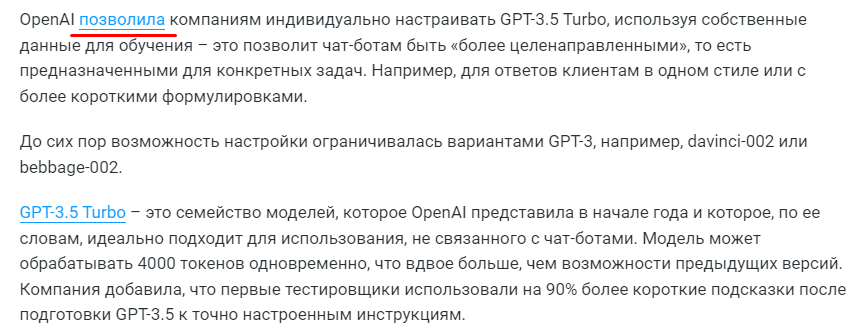
There are the following varieties of such links:
It is crucial for SEO to create a natural link profile, as search engine robots evaluate the diversity of link anchors. At the same time, the anchor text plays an important role, which helps search engines better understand the context of the link.
It is one of the simplest and safest types of anchor that does not include a keyword phrase. Instead, it consists of text that is either clickable and leads to a website or is a regular word that directly relates to the content of the page it points to. This type of link is distinguished by its naturalness, as it is most often used by ordinary users who do not always follow optimization for search engine robots.
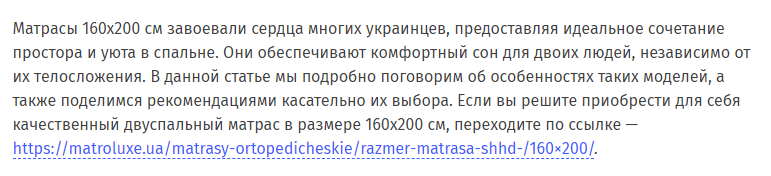
Non-anchor hyperlinks can be presented in various ways. Most often, it is a text form that represents the URL address of the page.
Here is an anchor example:
This method of creating link anchors is considered to be the most natural, as many online users simply copy and paste the URL addresses into their comments or publications without thinking about creating keywords.
Non-anchor links fit perfectly into the natural context of user interaction on the Internet, which makes them the preferred choice for ordinary people who are not familiar with the technical aspects of search engine optimization.
It is an important tool in SEO optimization, used to increase the position of a web-site in search results. These keyword phrases are especially selected to attract the target audience and stimulate actions, such as buying or ordering goods or services. However, when using a commercial anchor, it is necessary to consider the impact of such links on page ranking.

On the one hand, they are transparent and easily recognizable as an attempt to attract customers to make a purchase or order. It can lead search engine robots to consider such hyperlinks as purchased ones and not take them into account when ranking. On the other hand, improper use of a commercial anchor can cause a web page to be perceived by the search engine as an attempt to manipulate ranking.
The following phrases are most often used as anchor text:
There can also be other similar expressions aimed at stimulating the actions of potential customers.
However, once you decide to make a link with an anchor, you need to keep a balance and avoid overspamming. Instead, you should diversify them by including not only commercial phrases, but also informative and branded anchors. This approach will help build a more natural and diverse link profile, which will have a positive impact on the SEO optimization of the site.
To get the most out of using such links, it`s important to know how to do it correctly.
We decided to share a few valuable recommendations with you:
It is also important to analyze your competitors to understand how many times you should insert anchor and non-anchor links in a particular niche.
When developing a strategy for placing links with the anchor, you should take into account various aspects of search engine optimization. One important factor is the selection of key phrases for use in hyperlinks and their distribution across sites.
The most commonly used key phrases with an exact match in the anchor link should be placed on the most reputable and top sites. The reason for this is that search engines pay special attention to these texts on such sites, so their weight and importance for ranking may be higher.
At the same time, it is important to use non-anchor elements on other sites to create a natural and diverse link profile. They represent URLs or text fragments that are not keywords. Such links help dilute the link anchor and create a more natural and diverse link mass. It also helps build your site`s authority and credibility in the eyes of search engines.
This way, a reasonable combination of anchor and non-anchor links on various sites will help ensure optimal optimization in search engines, as well as increase the relevance and credibility of your resource in their eyes.

SEO, Linkbuilding, Content marketing for business
Click `Register`, you confirm that you have read, fully agree and accept the terms Terms of use of the site
Already sign up Login